Academic foundations
Learn by doing
Connect classroom learning with guided laboratory practice!

Go beyond syllabus learning with branch-wise, year-wise development, practical projects, technical readiness and career-focused preparation!
Choose your branch, follow a structured learning path, and build evidence of your skills from year one to graduation!
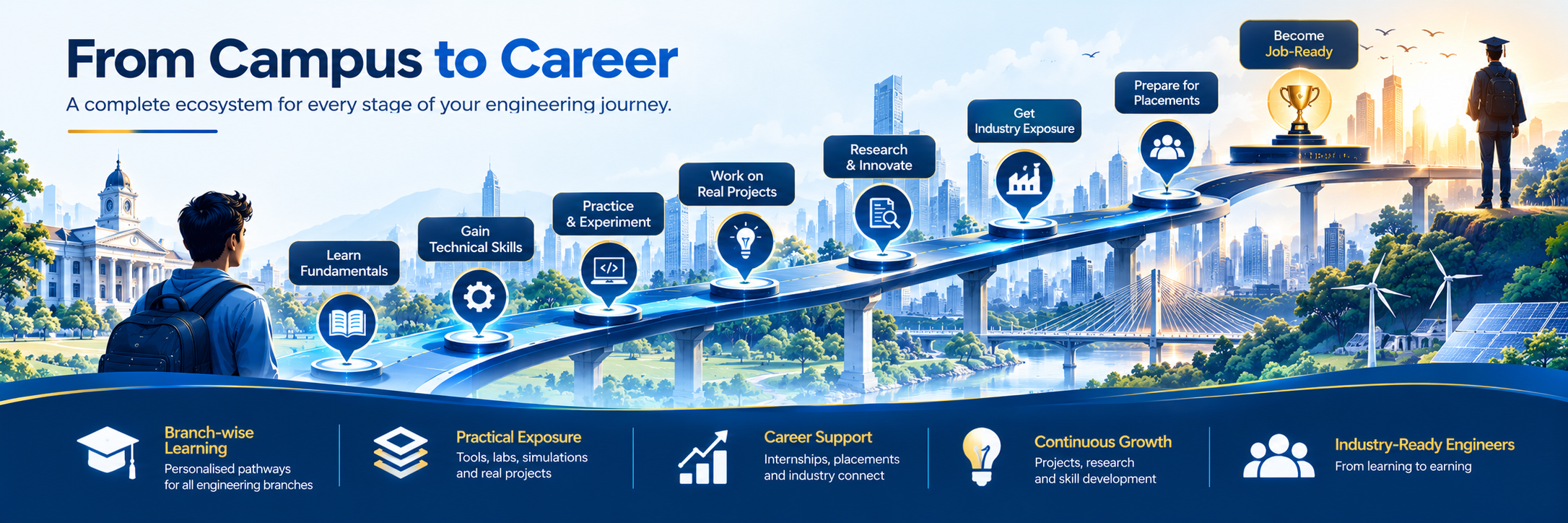
GYAN for Engineering provides a comprehensive branch-wise and year-wise development ecosystem for engineering students! Learners select their branch and academic year, then progress through a structured nine-stage pathway spanning foundations, core technical knowledge, practice and assessments, industry tools and laboratories, live projects, research, internships, placement preparation and job-ready validation! This academic-to-career journey is supported through projects, paper presentations, portfolio evidence and progressive skill development!
Explore Engineering Path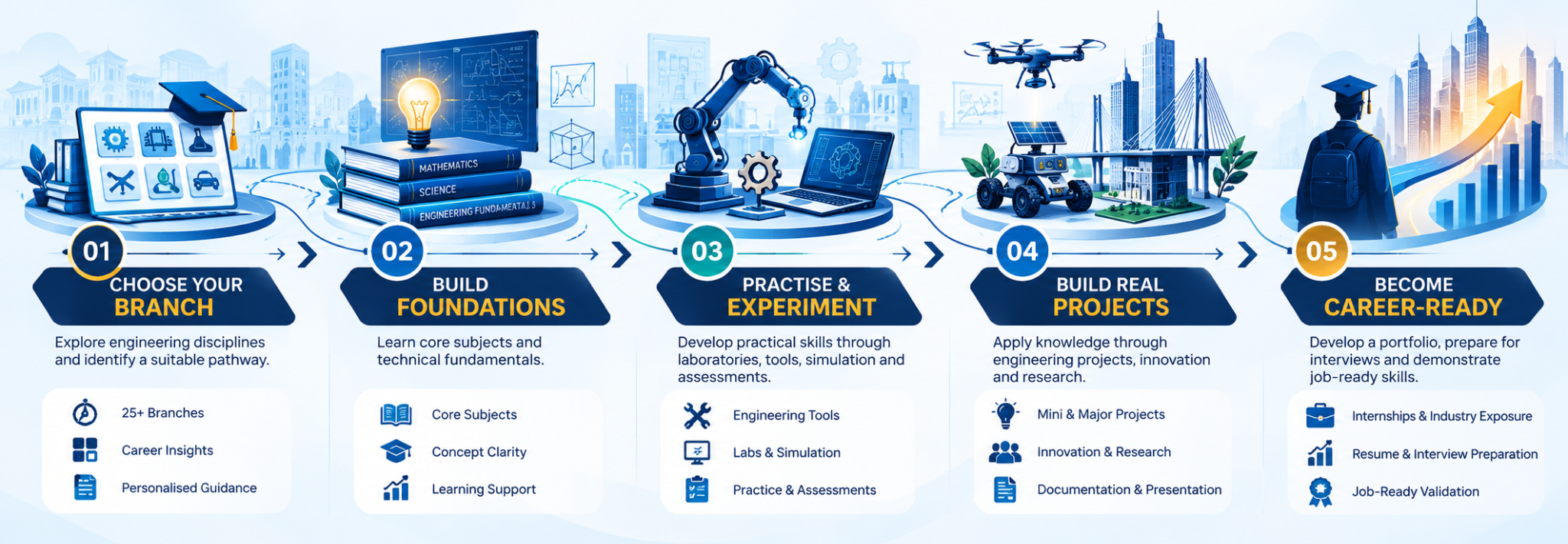
Discover engineering disciplines, learning pathways, practical tools, projects, and career opportunities!
25 branches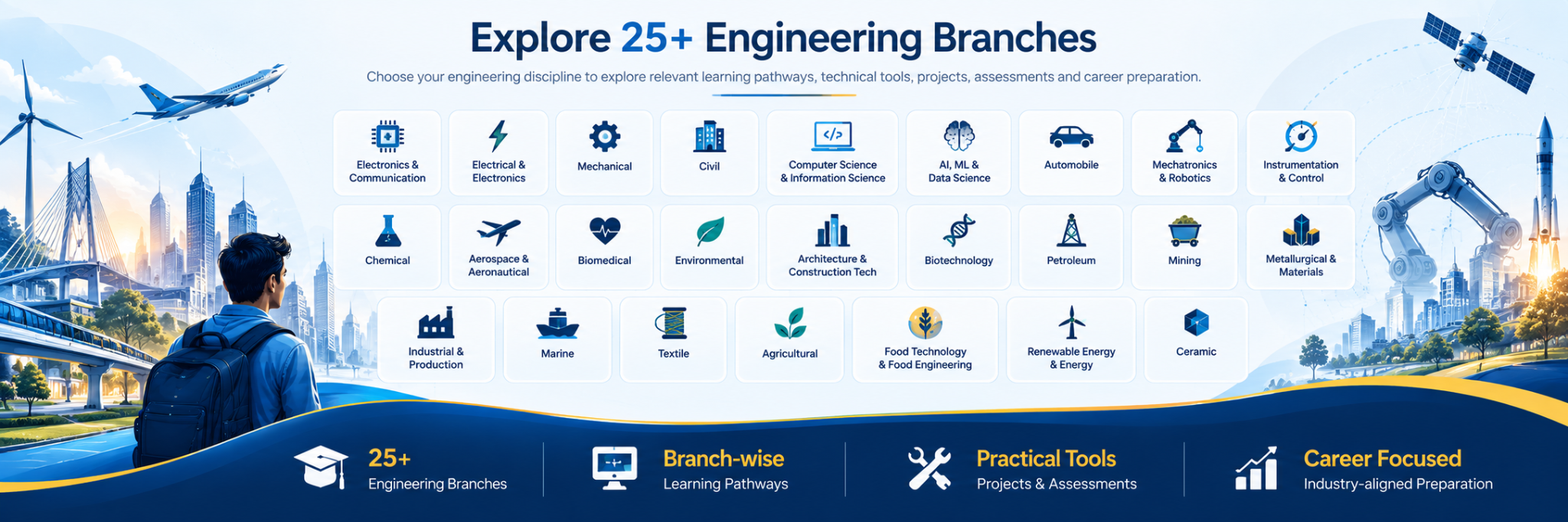
Showing 25 of 25 branches
Connect classroom learning with guided laboratory practice!
Build confidence with equipment, components and practical problem-solving!
Learn safe, applied skills with equipment and real-world processes!
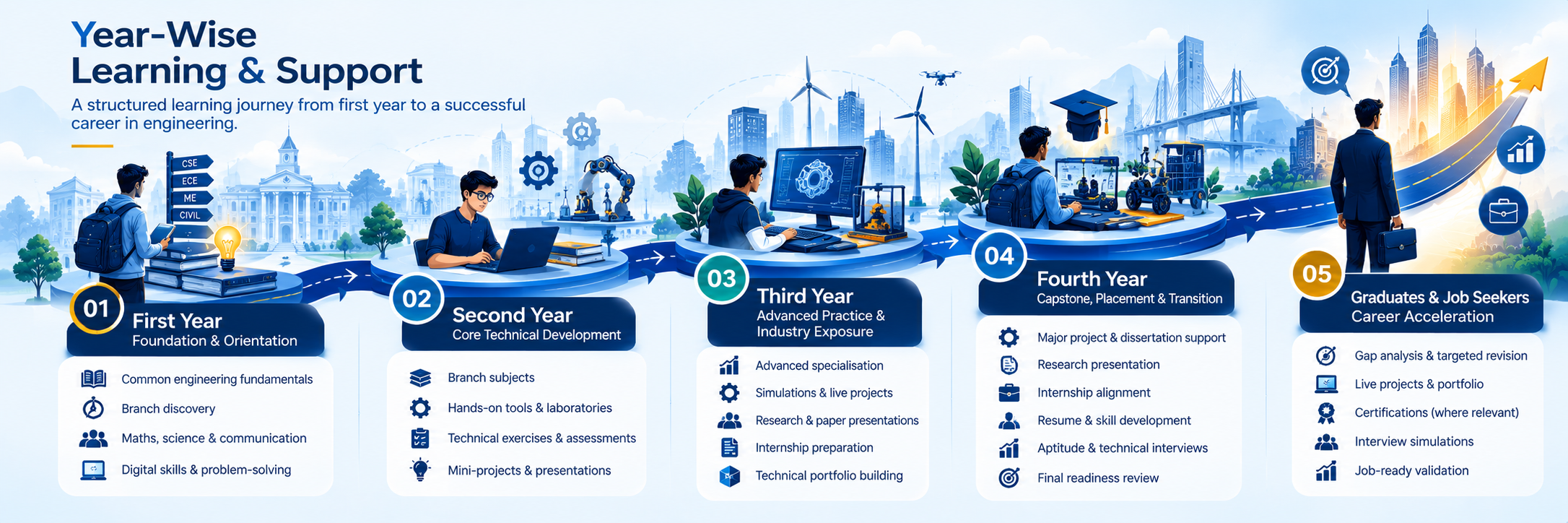
Common engineering fundamentals; branch discovery; basic mathematics, science, communication, digital skills, problem-solving and introductory technical activities! Emphasis on Stage 1 and the foundations of Stages 2–3!
Branch subjects; hands-on tools and laboratories; technical exercises; structured assessments; introductory mini-projects and presentations! Emphasis on Stages 2–4 with early Stage 5!
Advanced specialisation; simulations; live and team projects; innovation; paper presentations; research exposure; internship preparation and technical portfolio building! Emphasis on Stages 4–7!
Major project and dissertation support; research presentation; internship alignment; resume and Skill Passport development; aptitude and technical interviews; final readiness review! Emphasis on Stages 5–9!
Gap analysis, targeted revision, live projects, portfolio and Visume, certifications where relevant, interview simulations and structured job-ready validation! Emphasis on Stages 7–9 with remediation of earlier gaps!
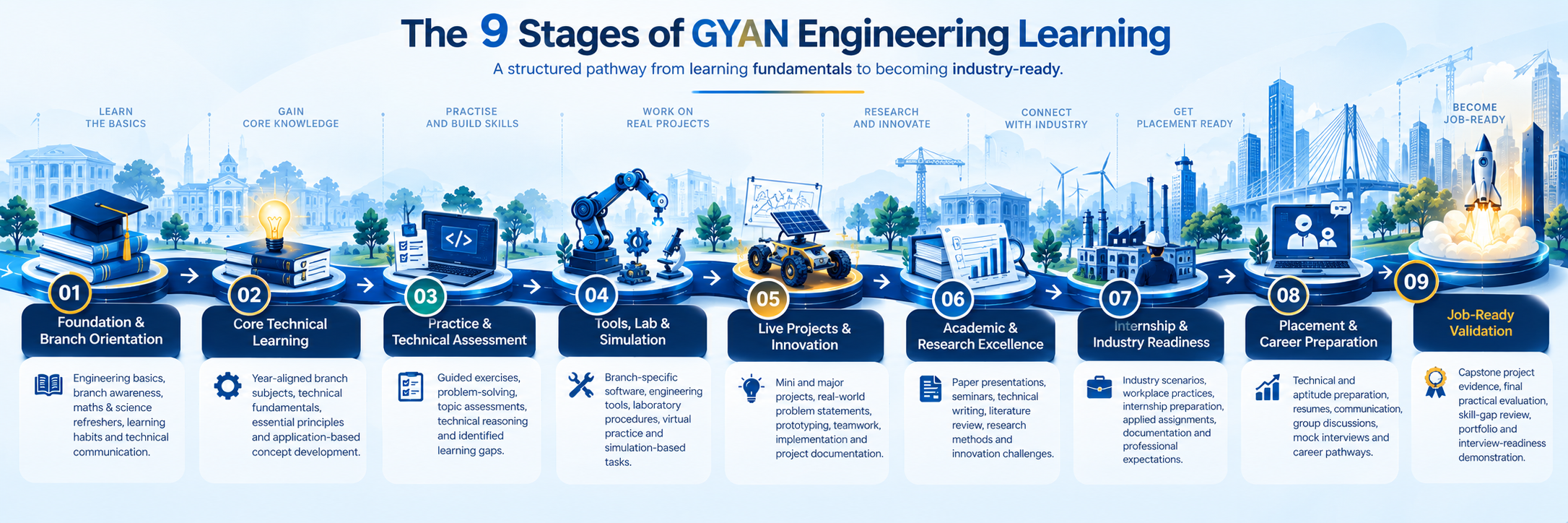
Engineering basics, branch awareness, mathematics and science refreshers, learning habits and technical communication!
Year-aligned branch subjects, technical fundamentals, essential principles and application-based concept development!
Guided exercises, problem-solving, topic assessments, technical reasoning and identified learning gaps!
Branch-specific software, engineering tools, laboratory procedures, virtual practice and simulation-based tasks!
Mini and major projects, real-world problem statements, prototyping, teamwork, implementation and project documentation!
Paper presentations, seminars, technical writing, literature review, research methods and innovation challenges!
Industry scenarios, workplace practices, internship preparation, applied assignments, documentation and professional expectations!
Technical and aptitude preparation, resumes, communication, group discussions, mock interviews and career pathways!
Capstone project evidence, final practical evaluation, skill-gap review, portfolio and interview-readiness demonstration!
Turn engineering concepts into prototypes through team-based project work!
Practise the design and software workflows used in engineering roles!
See how engineering teams develop and test industrial systems!
Explore experiments, emerging technologies and evidence-based design!
ECE, EEE, Mechanical, Civil, CSE/ISE, AI/ML & Data Science, Automobile, Robotics & Mechatronics, Instrumentation, Chemical, Aerospace, Biomedical, Environmental, Architecture & Construction, Biotechnology, Petroleum, Mining, Materials, Production, Marine, Textile, Agriculture, Food, Renewable Energy and Ceramic Engineering!
Choose the engineering branch and academic year!
Follow the recommended learning and skill pathway for that stage!
Study concepts and complete guided practical activities!
Build projects, presentations and evidence of capability!
Complete assessments and review readiness gaps!
Use career and interview tools to prepare for the next stage!
Prepare to present your skills, project work and experience to employers!
Connect your technical practice, project evidence and communication skills to internship and placement opportunities!